

16/04/2026 / Broadcast Revolution HQ


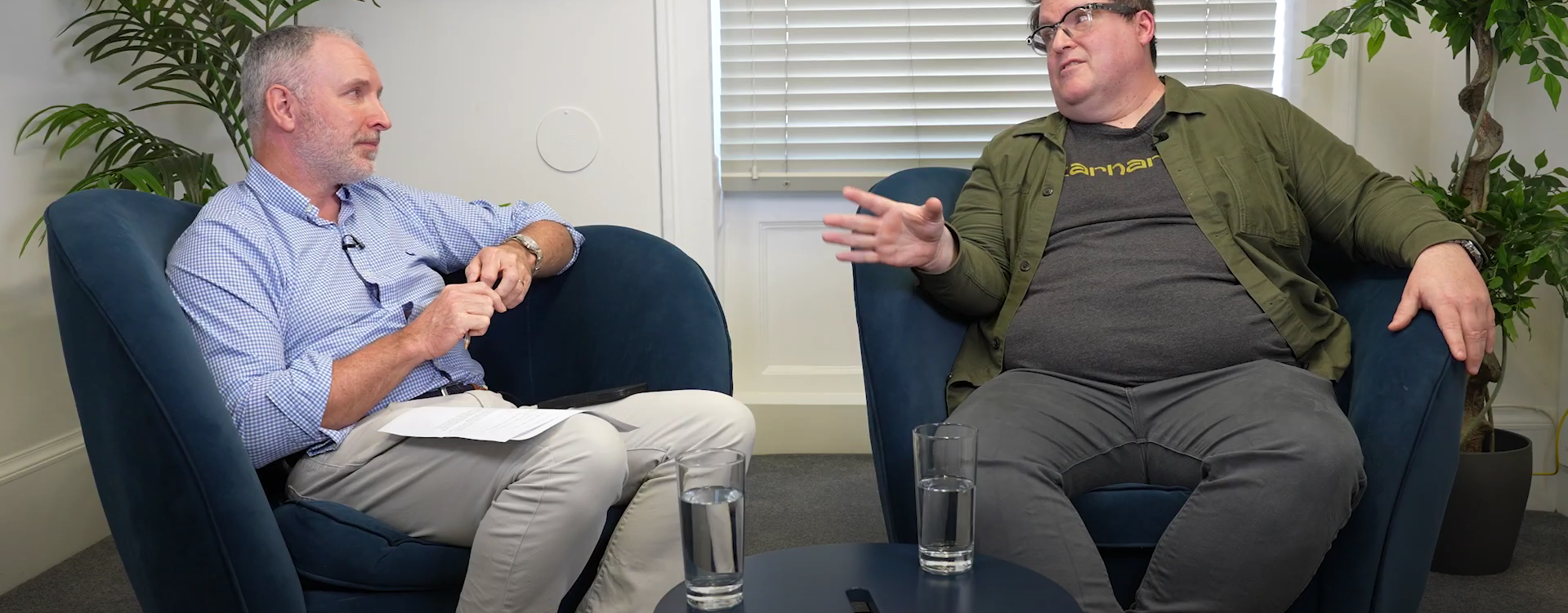
At our latest Broadcast Revolution event, we spoke with leading technology journalist, Will Guyatt. In conversation with Mike, our Head of News, Will shared what journalists truly need from PRs, why AI confusion is at an all-time high, and how an AI “Granny Scammer” became one of the most talked-about tech moments of the year.
What’s the Biggest Challenge for Tech Broadcasters Today?
Will said the biggest task is helping audiences navigate increasingly complex technology. “It is important to hold the hand of people while explaining new and challenging technology,” especially now that tech “bewilders a large part of society.”
He also warned of growing digital exclusion, with many people unable to access essential services simply because they lack a device.
Why Is AI Creating So Much Public Confusion?
AI dominates Will’s inbox and audiences are still struggling to grasp its scale. As ChatGPT reaches its third anniversary, he said: “We can be scared of it or in awe of it,” noting examples such as breast cancer research where AI has helped detect illnesses earlier than ever.
But he believes saturation could lead to burnout: “Society at some point is going to switch off.” Looking ahead to 2026, he expects a potential “AI crash” driven by over-optimism, and notes rising global competition as China works on low-power language models.
How Do You Make an AI Story Break Through?
Will’s advice is simple: the story must be bigger than AI itself. Linking it to real-world issues, like cyber-attacks and sustainability, adds value. “We don’t just want views; we want advice, skin in the game, solutions.”
One standout example was Virgin Media O2’s “Daisy Granny Scammer” campaign. Will said he fell in love with that story because it combined strong assets with a universal truth – everyone knows an elderly relative vulnerable to scammers. He also praised a small mental health charity using AI to support people in crisis. His team was able to connect the story to LBC’s regional coverage, demonstrating that not all tech narratives are limited to national shows.
What Do Journalists Actually Want During Tech Breaking News?
Cyber-attacks are one of the fastest-growing story areas. Will stressed that timing is critical: experts who respond 12 hours after an attack simply miss the moment. The people who break through are those who can react immediately and offer genuine expertise as the story unfolds.
He also urged PRs to avoid AI-generated commentary: “I can tell when someone has thrown a subject into an AI chatbot which masquerades as an opinion.” Authentic, fast, expert insight is what secures airtime.
How Can PRs Stand Out in an Oversaturated Tech News Cycle?
With up to 250 emails hitting his inbox daily, some wildly irrelevant, Will values pitches that are timely, relevant, and grounded in real expertise. Being present at events like CES helps organisations give sensory, on-the-ground insight.
The best relationships, he said, are those where people know when not to pitch him. If someone brings him something “real and authentic,” he will always want to cover it. His goal is simply to cover technology in “a real and humane way.”
What Makes a Great Home Broadcasting Setup?
When broadcasting from home, Will uses an iMac with an external camera, a capture card, a desk microphone, and a Rodecaster Pro, which allows him to mute quickly if needed.
He encourages folks to be creative with their setups. Will acknowledged that one of the reasons he gets bookings is because he often appears on air with arcade machines visible behind him. A blank wall, he said, is far less appealing. Nostalgia plays a surprisingly powerful role for broadcasters.
Last Comments
Will’s parting message was simple: “You are the expert – don’t forget it.” Passion, originality and genuine insight are what journalists want, and what audiences connect with.
16/04/2026 / Broadcast Revolution HQ
18/09/2025 / Broadcast Revolution HQ

26/06/25 / Broadcast Revolution HQ