What is Broadcast Media in the Modern Age?
It seems like a simple question, but in the last decade, answering “what is broadcast media?” has become a little more complicated.
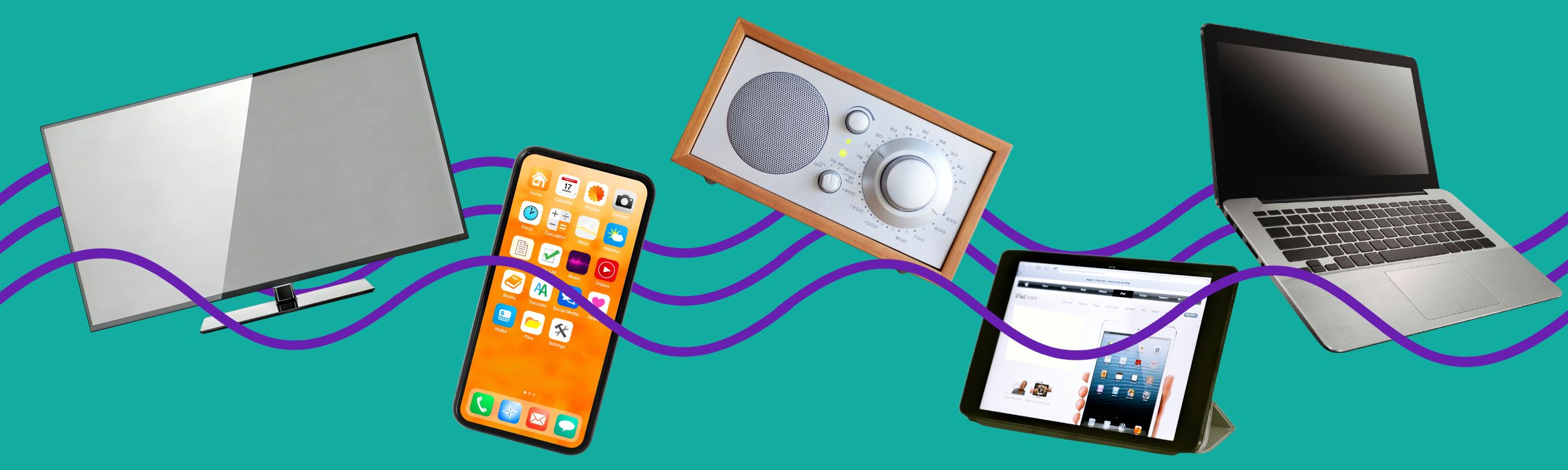
The line between “traditional” and “new” media is becoming increasingly blurred, creating a profoundly altered landscape where the opportunities for those working in PR are proliferating.
To learn more about the many waves of broadcasting and the modern media landscape – and a blueprint for making an impact within it – download our 2026 report.
The definition of broadcast media
What counts as ‘broadcast media’ in the modern age largely depends on how much of a stickler you are regarding the definition, but traditionally, the term referred to audio and visual content transmitted via TV and radio – i.e. channels that broadcast information, as opposed to setting it out in print.
Radio developed as the first electronic medium of mass communication in the 1920s, with TV following close behind with its introduction in the 1930s. It is astonishing to reflect, given the extent of transformation we’ve seen in the last two decades, that it would take a further 50 years from this point for TV’s capacity to grow to four channels (with Channel 4 being launched in 1982).
Who regulates broadcast media?
In the UK, broadcast media is regulated by Ofcom, ensuring standards around accuracy, fairness and impartiality. This regulation has played a significant role in why broadcast news, in particular, continues to be one of the most trusted sources of information.
Classic examples of broadcast media include:
- National and regional TV news
- Live radio interviews
- Scheduled programming across public and commercial broadcasters
But while those foundations remain, the way broadcast content is created, shared and consumed has changed dramatically.
Broadcast meets digital
The introduction of digital television in the late 1990s and early 2000s vastly increased the number of stations, but the real revolution came with the explosion of Internet use and mass adoption of smartphones in the 2010s.
This has transformed broadcast media. Whether it’s podcasts, livestreams, YouTube, social clips, the term can encompass far more than it once did – and with broadcasters from Global to the BBC all embracing a multichannel strategy, content isn’t just broadcast once; it’s repackaged, shared, and amplified. This means there are now many doors into every media brand, whether that’s landing big on-air interviews or securing spokespeople as podcast guests.
Broadcast is no longer a single channel or moment in time. In the modern age, one interview can live many lives, across TV, radio, websites, streaming services, podcasts, YouTube and social media.
How broadcast media works in the modern landscape
Modern broadcasting is multiplatform by design. Content is created with reuse and amplification in mind, meaning strategic planning is more important than ever.
Syndication plays a major role here. Sky News Radio, for example, pre-records interviews that are then shared with more than 280 commercial radio stations across the UK. A single interview can reappear the following morning across multiple bulletins and regions.
Regional broadcasting also offers significant scale. The BBC’s Central News Service (CNS) allows spokespeople to reach numerous local radio stations in a short space of time, often securing a combined audience of over a million listeners. BBC Sounds also means that what might start as a broadcast news story may transform into a deep-dive podcast on the same topic.
ITV’s shared content hub works in a similar way, distributing packaged reports across up to 11 regional news programmes, enabling wide reach from a single interview.
And this is to say nothing of social media, which has developed into an essential means of amplification for broadcasters. This was powerfully illustrated in 2025 by our work with Hasbro and Pretty Green, where Mummy Pig’s live TV interview on Good Morning Britain broke the Internet, being viewed over 80 million times on TikTok alone.
This is why broadcast media is no longer just about “getting on air”. It’s about understanding how each outlet distributes content and how far it can travel.
The importance of broadcast strategy
Understanding how broadcasters operate behind the scenes allows brands to work smarter, not harder, ensuring each appearance delivers maximum impact. For example, if a smaller station has a strong social media presence with an engaged younger audience, an appearance there might be more effective in achieving a campaign’s goals than a station with a larger initial live audience.
The biggest challenge in modern broadcast media is complexity. Fragmented audiences, varied platforms and different editorial priorities mean there is no one-size-fits-all approach. But amid this complexity, the levers that PRs can pull to achieve real-world goals have grown both more numerous and more powerful.
This is why integrated broadcast PR isn’t just storytelling, it’s business strategy. When planned intelligently and executed creatively, broadcast sits at the centre of modern communications, delivering impact far beyond the airwaves.
As traditional and digital platforms continue to converge, broadcast will remain one of the most influential and trusted ways for brands to tell stories, shape narratives and reach audiences at scale.