
The Rise of the Content Day
When it comes to content creation, questions are often centred on the practicalities - when, where, who and how. But the more important question isn't logistical. It's strategic. What happens when a brand commits to showing up consistently, across every channel its audience uses, with content that actually has something to say? The potential impact, from relationship building to employee engagement, is extraordinary.
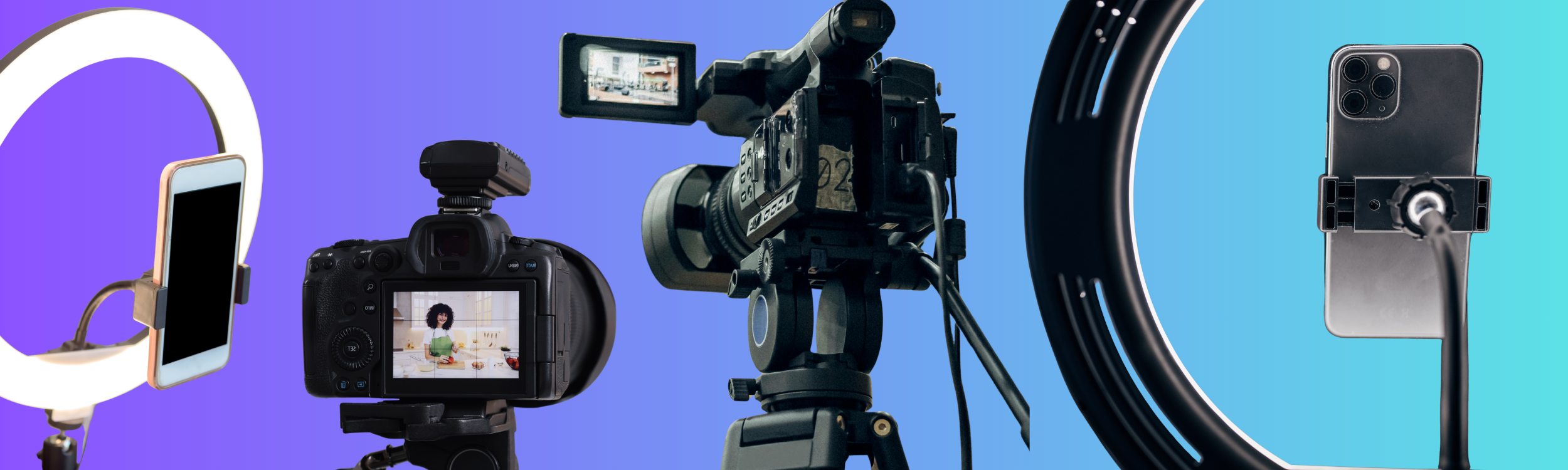
The brands doing this well aren’t treating each piece of content production – whether that’s B-roll, brand hero video or livestream – as a discrete deliverable. They’re building a presence that compounds over time, earns trust through depth across multiple touchpoints, and keeps working long after any individual shoot is wrapped. They have stopped thinking about content as a series of productions and started treating it as an owned and interconnected engine.
Without investing in a dedicated media function, this isn’t an easy ask, but it’s exactly what a ‘Content Day’ is designed to make possible. Rooted in the Many Waves framework (our way of thinking about how content moves across broadcast, social, podcast and everything in between), it’s the practical mechanism for building that engine: backed by the strategic thinking and consultative expertise to make every moment on set count.
The PR world is familiar with the concept of a broadcast day, where spokespeople do back-to-back interviews across a range of stations, so it’s no surprise that a content day is now being added as a strategic and eminently practical tool to extend conversations through online and social.
The conviction at its core is simple. When you have access to talent, a crew and a location, the starting point shouldn’t be what are we making today. It should be what are the opportunities while we’re here, and what story can we keep telling across platforms.
More than one output from one day
The traditional model of a shoot is straightforward: you had a deliverable, you filmed it, you finished up. But brands are now communicating across more channels than ever. A campaign that might once have needed one asset now needs ten – short social clips, internal comms video, a thought leadership interview for LinkedIn, behind-the-scenes material, maybe a suite of assets to support media pitching. Expecting each of those to come from a separate production day isn’t realistic, and it’s expensive.
The Content Day treats filming as an opportunity rather than a simple exchange of skills and services. By building in time for additional pieces to camera around the core deliverable, it’s possible to create a much wider bank of assets without any meaningful increase in production cost. The extra outlay is usually just editing time.
We’ve applied this across a range of projects. On a recent shoot with Hyundai, the primary brief was B-roll to support a broadcast campaign. But we also captured additional interviews and soundbites from their spokesperson for internal use – material that was later cut into a hero video for colleagues, with music and graphics, raising awareness of the campaign inside the organisation as well as outside it. Two very different outputs, one day on set.
If we’re livestreaming an event, we can also capture quickfire interviews with panellists and attendees for future use and “stop the scroll” social snippets – building up a bank of evergreen content. This is something that we’ve done for both Santander and Igel.
Why this fits how content actually travels
There’s a broader logic to this that connects to how we think about broadcast and communications campaigns more generally. In our Many Waves of Broadcasting report, we talk about how a broadcast hit is rarely the end of a story; it’s the beginning of one. The initial coverage generates a social surge. After this, longevity: podcast appearances, feature requests, follow-up coverage that can run for months.
Content captured on a well-planned filming day can support that entire journey, or create a journey all of its own, just based in the content itself. The longer-form interview becomes the LinkedIn thought leadership piece. The soundbites become social snippets. The behind-the-scenes material becomes the kind of spontaneous, authentic content that often outperforms anything scripted and that audiences increasingly expect to see.
This is something we saw play out with Hyundai, where content captured alongside the core production work gave the campaign a much longer shelf life across different platforms and audiences. Getting that material didn’t require a separate shoot, it just required thinking ahead.
That’s the deeper value of thinking this way. A well-planned filming day doesn’t just produce content, it builds infrastructure. Assets that support a broadcast hit today become the thought leadership video that earns trust next quarter and the social engagement that keeps a brand visible in between.
Planning is where this is won or lost
A Content Day that isn’t properly planned is inevitably a chaotic experience, which is why having a strong structure matters.
We aim for at least a month of pre-production wherever possible. That gives enough time to develop scripts, get approvals, and make sure the client is comfortable with the full scope of what’s being captured. For organisations with more complex sign-off processes (medical companies, financial services firms, anyone with multiple stakeholders) that timeline needs to be even longer.
On the day itself, we generally film priority content first. Longer-form interviews happen early, when the spokesperson is fresh. Once the key messages have been established in conversation, shorter social content, quick-fire questions and additional pieces to camera follow naturally. The messages are front of mind and the talent is warmed up and relaxed, which is what makes this work.
Talent briefing is non-negotiable
One thing that can derail even a well-planned Content Day is talent who arrive not knowing the full scope of what they’ve agreed to. Usage rights, platform usage, expectations around sharing content on personal channels – all of this needs to be contracted and agreed before filming starts, not sorted out afterwards.
It’s also worth checking what else talent has going on. If a spokesperson is mid-campaign for a competitor or is about to announce something that would conflict with the messaging, that affects how and when the content can be used. These conversations are much easier to have at the planning stage than on set.
Knowing your output before you start
The most important question isn’t how many cameras you have on the day – we can run a Content Day with one person and a kit bag, or scale up to a full crew with several cameras and scores of people, depending on what’s being captured. The question is what the content is actually for, and designing the shoot around that.
If the goal is corporate thought leadership, LinkedIn video and internal comms are usually the priority. If the brand is trying to reach a younger audience, short-form social content shapes everything about how the day is structured. If the audience is niche and specialist, a mini podcast series might be the most valuable output, which is something we’ve done successfully for clients including the Building Societies Association during UK Savings Week.
Matching format to audience, then planning production around that, is how Content Days generate real value rather than just more footage.
The value of production partnership
There is unique benefit brands can gain from the kind of consultancy that comes from having done this many times across many sectors. Knowing what has landed, what hasn’t, which format suits which platform, how to read the room with a spokesperson who needs more or less direction. That knowledge is accumulated, with many cross-sector learnings that are impossible to replicate elsewhere.
At Broadcast Revolution, we can also offer journalism instincts. Understanding when something is newsworthy, when an angle is strong, when a moment is worth capturing that wasn’t in the plan is the product of years of broadcast experience, and it’s what turns a good filming day into a suite of assets that hit multiple business goals.
This is why a Content Day is more than a production model. Approached strategically, it’s a new way of thinking about what content is for – and how a brand builds a consistent, credible voice across every channel its audience uses, delivering more impact the longer it runs.